
In this article
Choosing the stone for a façade is one of the most important decisions on any building project. It sets the character of the architecture, it will be seen by everyone who passes, and — if it is chosen well — it will still be doing its job long after the interiors have been replaced several times over. Yet the decision is often made from a small sample on a meeting-room table.
This guide explains what we look at when helping architects, developers and homeowners choose a façade stone, and the questions worth asking before you commit.
Start with performance, not just appearance
Two stones that look almost identical on a sample board can behave very differently on an exposed elevation, so first establish whether a stone is physically suitable for the job.
Durability and frost resistance
The British climate is hard on external stone. Repeated wetting, freezing and thawing can open up weaknesses, especially near the ground, on copings and cills, and on elevations facing the prevailing weather. Reputable suppliers can provide independent test results for frost resistance, and these should be read alongside the stone's performance on existing buildings in similar conditions.
Water absorption and weathering
How much water a stone absorbs, and how readily it dries out again, influences how it weathers, how quickly it attracts soiling and algae, and how it copes with salts. Denser stones with lower absorption tend to stay cleaner and suffer less frost damage, although many more porous stones have excellent long-term records when they are well detailed.
Strength and panel size
Flexural strength determines how large and how thin a panel can safely be, and where the fixings need to go. Weaker stones are not necessarily poor choices, but they may need thicker units, smaller panels or more fixings — all of which affect cost, weight and appearance. Ask for test data early so the structural engineer and stone specialist can check that the architect's intended panel sizes are achievable.
Understand the main stone families
Most façade stones fall into a handful of families, each with a distinct character:
- Portland stone — the pale Dorset limestone behind many of Britain's best-known buildings. Whitbed is the usual choice for façades, Basebed for fine carving and detail, and the shelly Roach for textured plinths and feature elevations. It weathers gracefully and remains one of the most specified façade stones in the UK.
- Limestone — calm, even and light in tone. Bath stone and many European limestones are widely used for modern cladding as well as historic buildings.
- Granite — very hard, dense and low in absorption, making it ideal for plinths, busy ground floors and exposed locations. It takes a wide range of finishes, from polished to flamed.
- Marble and slate — used more selectively on façades. Some marbles can bow when used as thin external panels, so specialist advice is essential; slate performs superbly as cladding and copings when chosen carefully.
Not every façade has to be solid natural stone. Terracotta rainscreen panels, glass-reinforced concrete (GRC) and precast panels with an exposed stone-aggregate finish are all well established, and can sit alongside natural stone on the same building where weight, shape or programme call for them.
Consider the building and its setting
Height, exposure to wind-driven rain, proximity to the coast, local pollution and the amount of shelter provided by overhangs all matter. So does context: in a conservation area or next to historic buildings, the planning authority may expect a stone that relates to its neighbours in colour, texture and coursing.
A stone with strong natural features can look spectacular at eye level but busy across a tall elevation, so judge it at scale, on a completed building or a large sample panel.
Think about the fixing system early
The choice of stone and the choice of cladding system are closely linked. Traditional hand-set cladding supports thicker units on stainless steel angles and ties them back to a masonry or concrete wall. A ventilated rainscreen hangs thinner, calibrated panels from a metal subframe with a drained cavity behind. Each system suits some stones, thicknesses and designs better than others.
On taller residential buildings and others where combustibility restrictions apply, the whole wall build-up must be considered. Natural stone itself is non-combustible, but insulation, membranes, cavity barriers and brackets all need to be coordinated with the fire strategy. Our stone cladding team works through these questions with the design team rather than leaving them until the package is tendered.
Finishes change everything
The same stone can look completely different depending on how its face is finished. Sawn and honed finishes are smooth and refined; shot-blasted, bush-hammered and tooled finishes add texture and soften colour variation; flamed granite has a slightly rough, sparkling surface. Finishes also affect how a façade weathers and how easy it is to clean, so they should be chosen with maintenance in mind, not only appearance.
Look at stone that has already weathered
The best predictor of how a stone will perform is how it has already performed on real buildings in a similar climate.
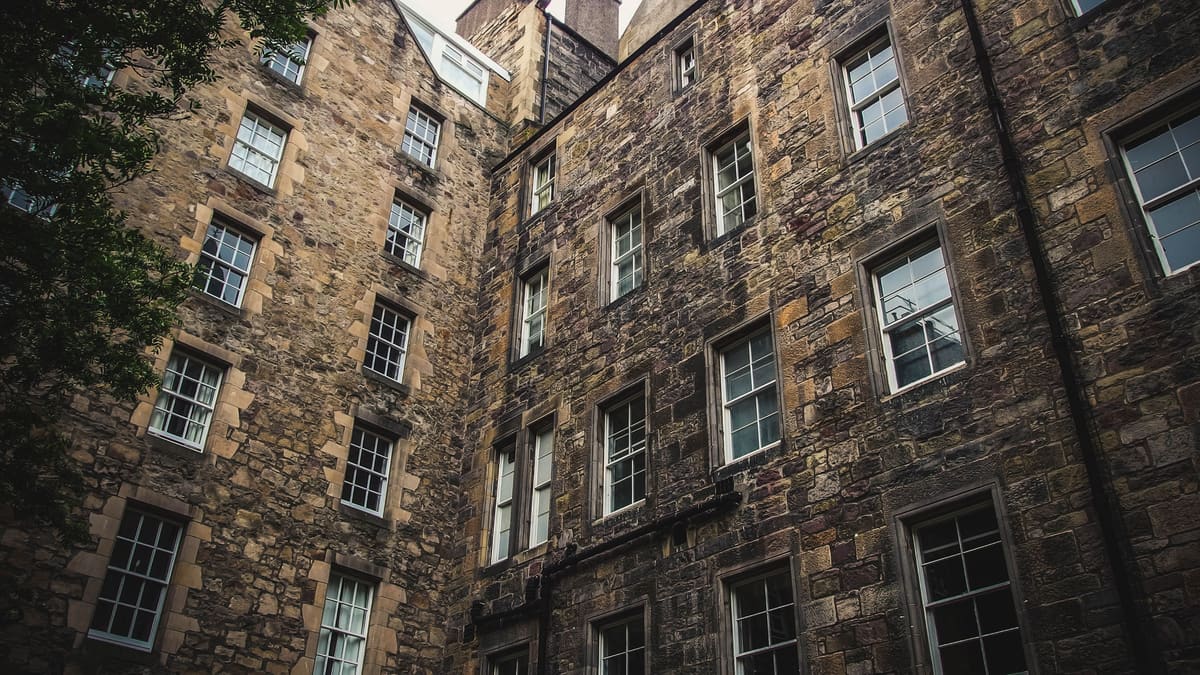
Ask the supplier for examples of completed buildings that are at least several years old, ideally in comparable exposure, and go and look at them. Check the lower courses, copings and cills, where problems show first. Weathered buildings reveal things that no sample board can: how the colour mellows, whether the surface erodes, and how the stone looks when it is wet.
Supply, consistency and sustainability
A stone is only a good choice if it can be supplied in the quantities, sizes and consistency the project needs, within the programme. Ask about block sizes, the range of natural variation, lead times and whether the quarry can supply matching stone for future repairs.
Natural stone has strong sustainability credentials: it needs relatively little processing, lasts for generations and can be reused. Sourcing from UK quarries can shorten supply chains, and some suppliers publish environmental product declarations to help compare options.
A simple checklist
- Obtain independent test data for strength, water absorption and frost resistance.
- Visit completed buildings that use the stone in similar conditions.
- Agree the finish, and check how it affects weathering and cleaning.
- Confirm the cladding system, panel sizes and fixings with a specialist and a structural engineer.
- Check supply, lead times and the acceptable range of natural variation.
- Approve a sample panel or visual mock-up before production begins.
Getting it right from the start
Choosing a façade stone is a balance of appearance, performance, buildability, programme and budget. Involving a stone specialist early makes that balance far easier to strike — and far cheaper to adjust. If you are at the early stages of a project, our consultation service can help you build a shortlist with confidence, or you can get in touch to talk it through.