

All Stone Facades All Stone Facades

Search

Stone cleaning & restoration

Bringing tired and damaged stonework back to its best

Façade cleaning, stone repair, repointing and floor restoration for listed buildings, period homes and commercial properties — always with the gentlest effective method.

Cleaning & Restoration overview

Stone that looks beyond saving usually is not. Most soiling, staining and decay can be treated, and most damaged stones can be repaired or replaced piece by piece. We diagnose the cause before treating the symptom, trial every method on a small area first and aim to leave each building healthier, as well as cleaner, than we found it.

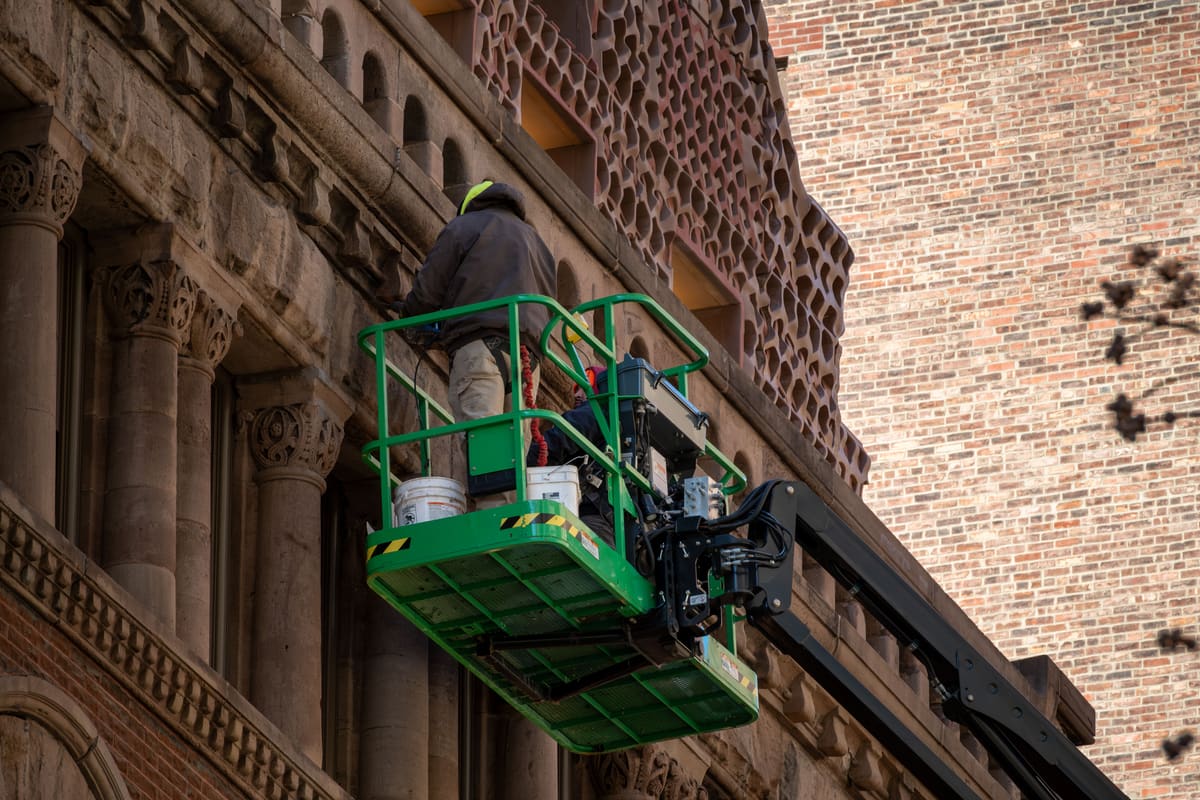
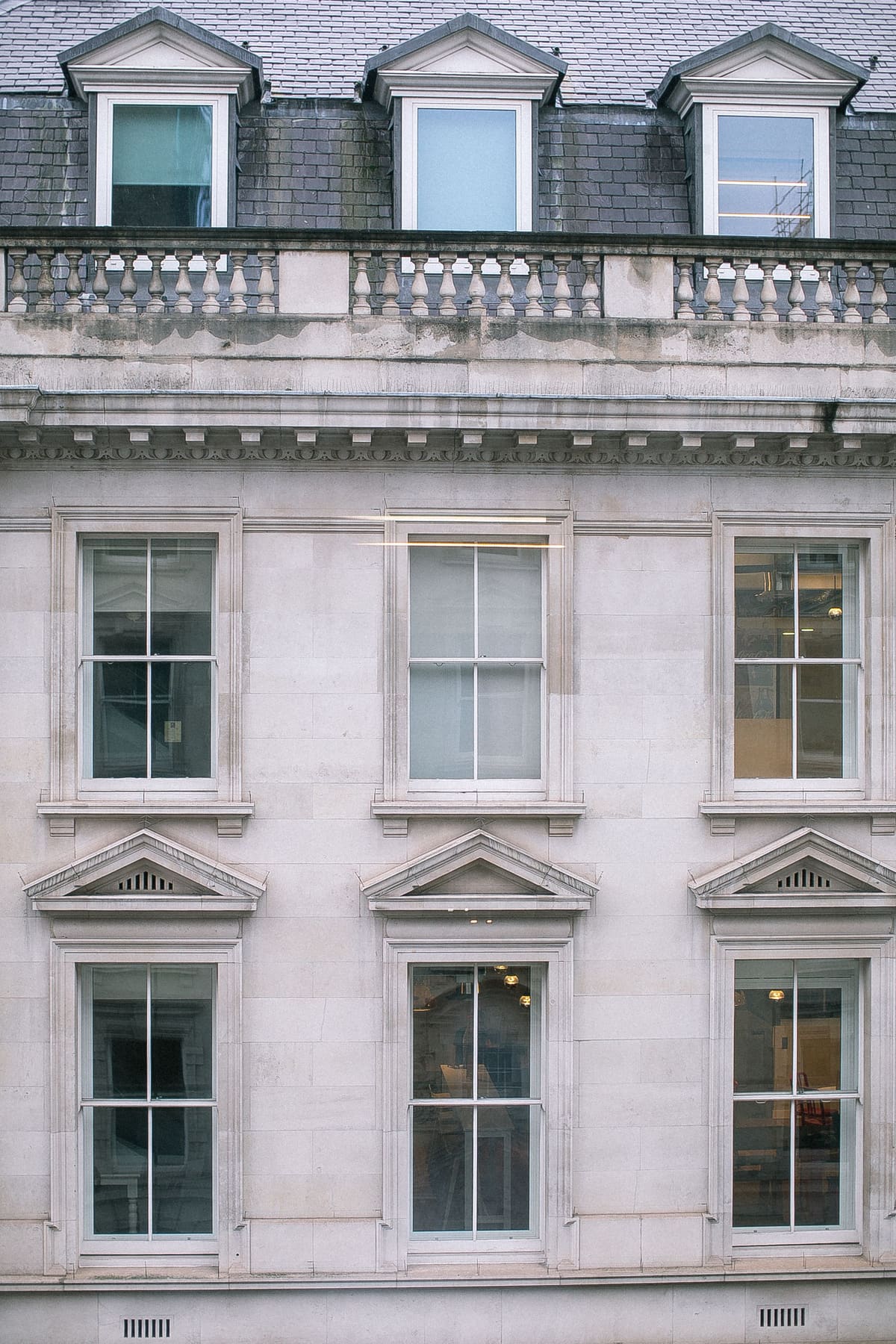
Pale stone townhouse façade with pedimented sash windows and a balustraded parapet

Cleaning façades without harming them

Dirt on a façade is rarely just dirt. Carbon soiling, biological growth, gypsum crusts, paint and graffiti each respond to different treatments, and the wrong method can strip away the stone's weathered surface along with the grime. We identify the stone and the type of soiling, then clean trial panels so the client — and, where needed, the conservation officer — can agree the result before the work is scaled up.

Our methods range from the very gentle to the more robust: low-pressure superheated water and steam, fine water misting for limestone, carefully controlled micro-abrasive cleaning, poultices to draw out stains, and specialist chemical cleaners used only where the stone can tolerate them. High-pressure washing and aggressive grit blasting, which can permanently damage stone, have no place in our approach.
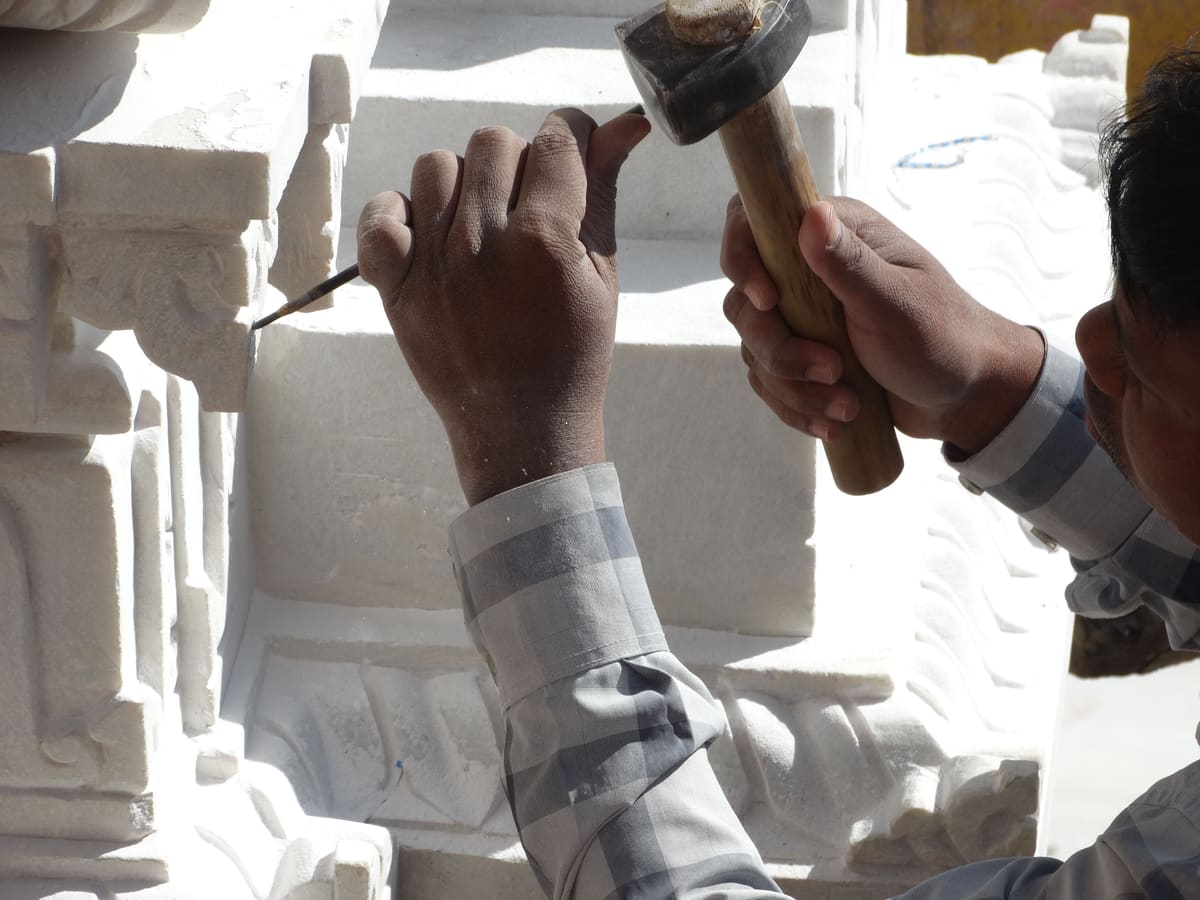
Stonemason carving a white marble architectural detail with mallet and chisel

Repair, replacement and repointing

When stones have cracked, spalled or eroded, we choose the least intrusive repair that will last. Small losses can be rebuilt with lime-based repair mortars matched to the colour and texture of the surrounding stone. Delaminating pieces can be pinned and re-fixed with stainless steel dowels. Where a stone has decayed too far, we cut it out and piece in a new indent from a matching source, worked by hand to the original profile.

Pointing matters as much as the stone. Hard cement mortars trap moisture and force it to evaporate through the stone instead of the joints, accelerating decay. We rake out defective pointing by hand and repoint in lime mortars that are softer and more breathable than the stone around them, so the joint — not the stone — takes the strain and can be renewed in the future.

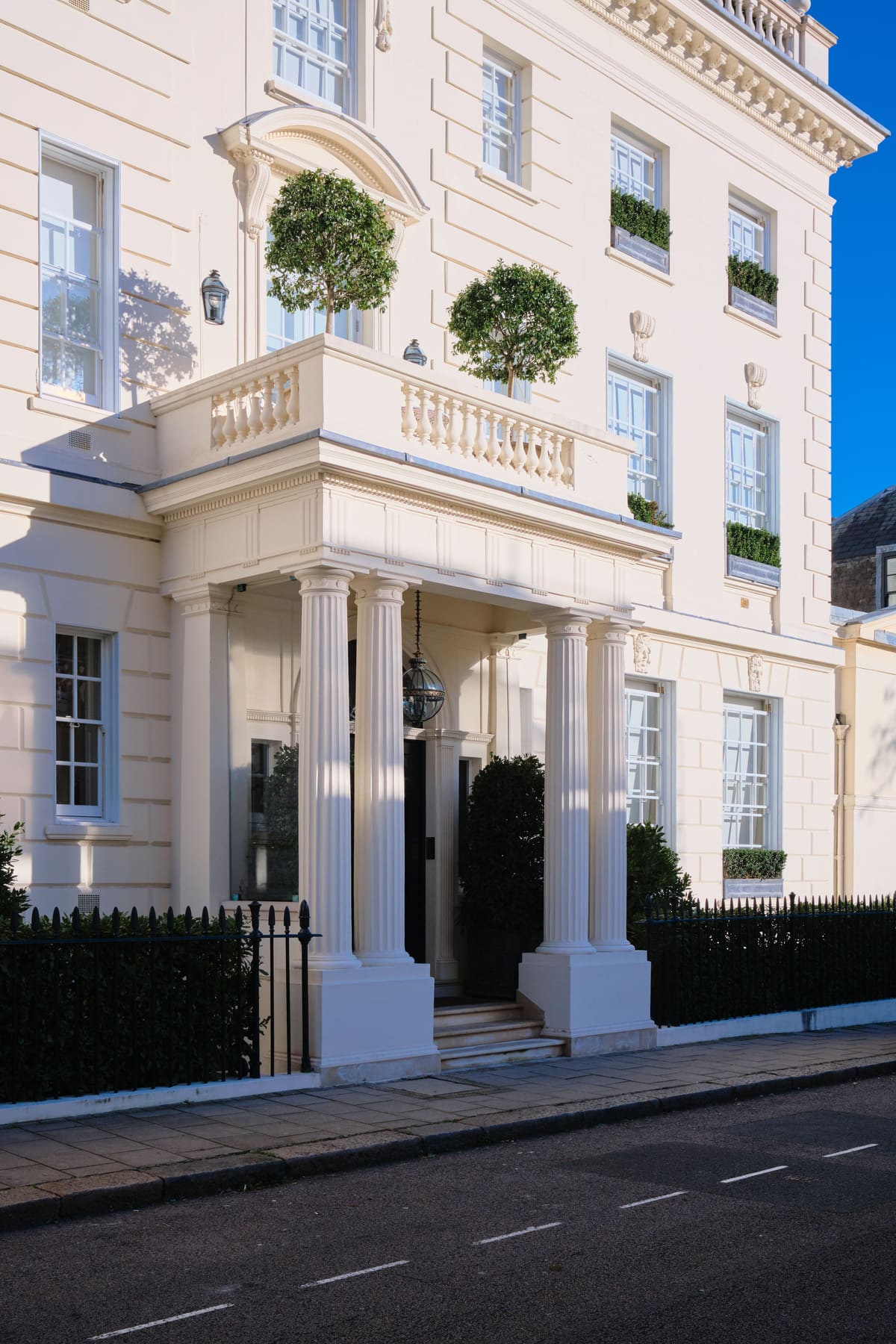
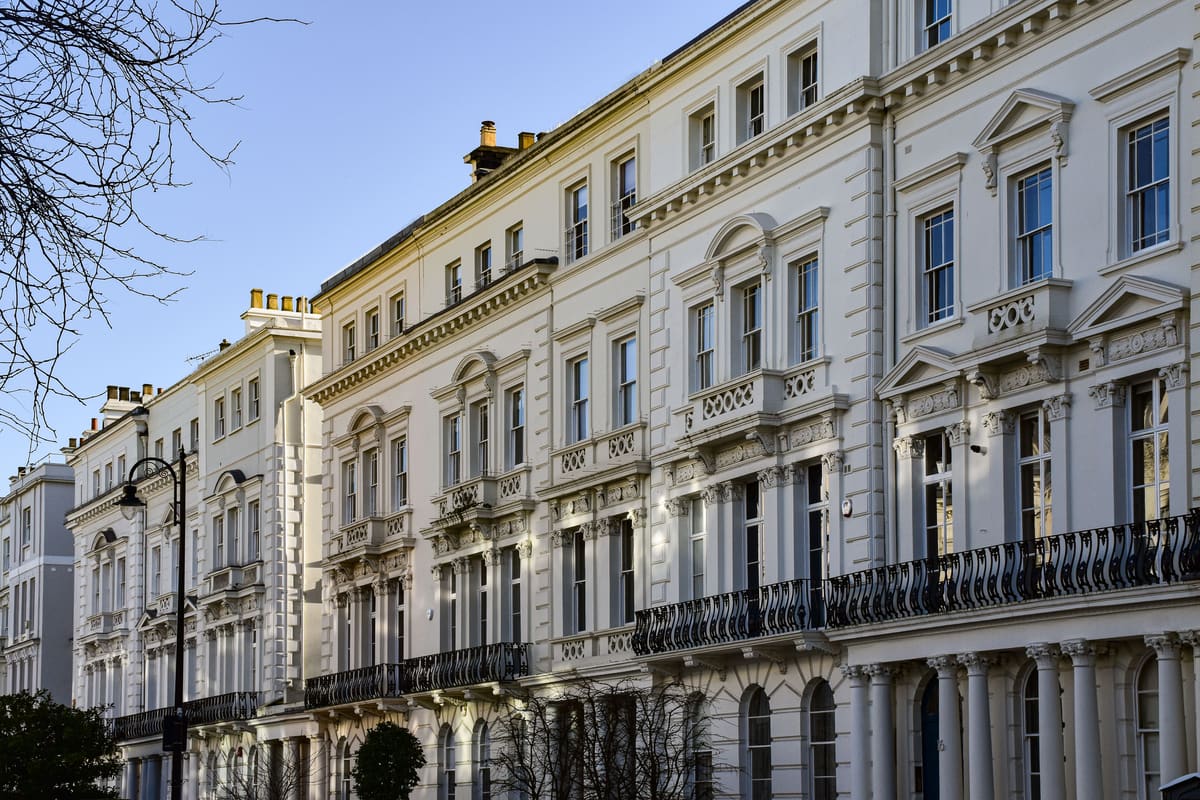
White townhouse entrance with a columned portico, balcony and clipped topiary

Heritage and listed buildings

Many of the buildings we work on are listed or sit in conservation areas, where cleaning and repairs may need consent and should always follow good conservation practice. We prepare method statements, trial results and material samples to support applications, and we work alongside conservation officers and heritage consultants from survey to completion.

Our approach follows well-established principles: repair rather than replace, match like with like, and make interventions that can be understood and, where possible, reversed by future generations. That might mean keeping a weathered stone with character instead of swapping it for a crisp new one, or recording every replaced unit so the building's history remains legible to those who care for it next. We are also happy to advise owners at pre-application stage, when a clear understanding of the building's condition helps shape proposals that are more likely to be approved.

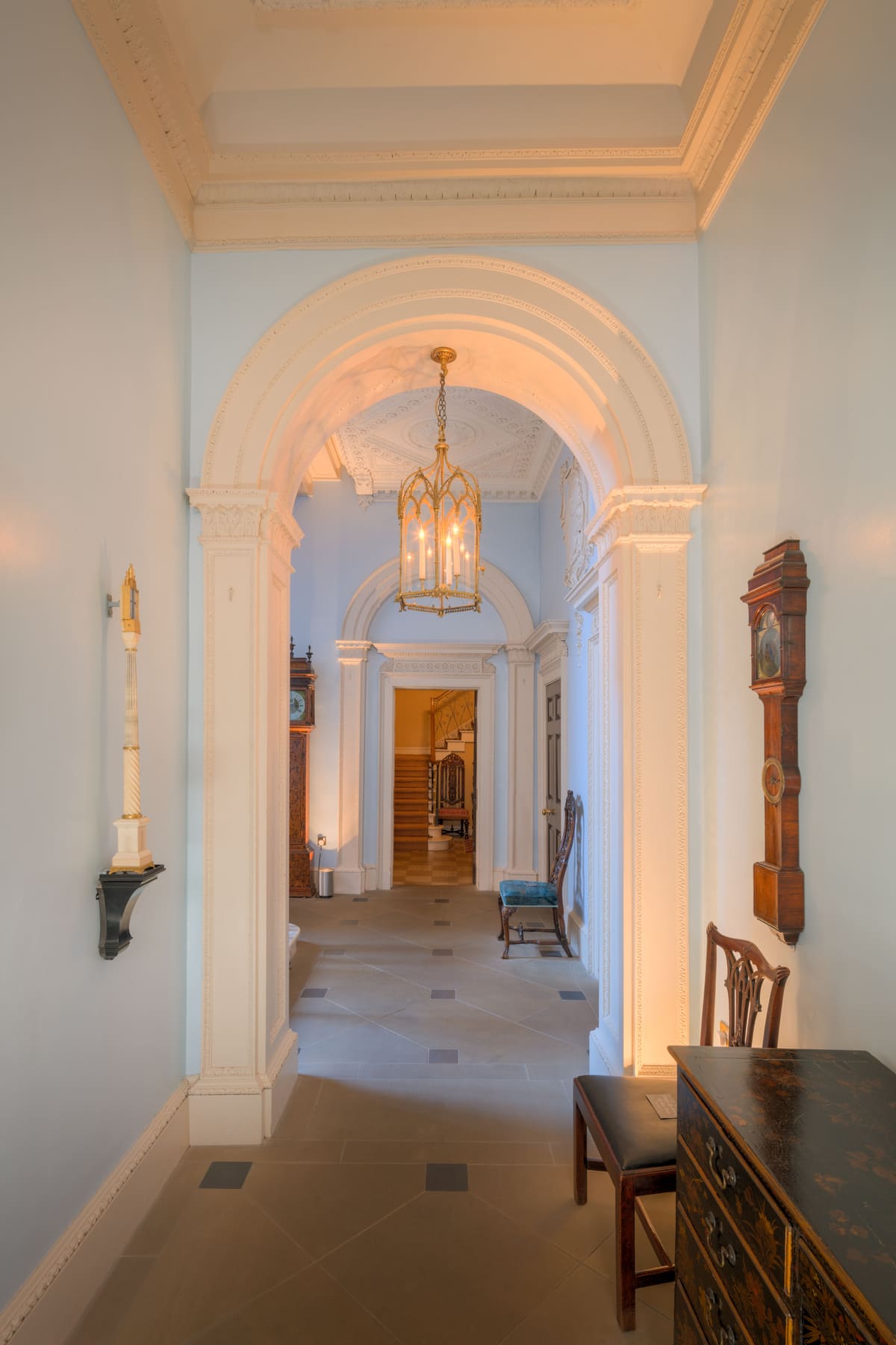
Period hallway with an arched opening, hanging lantern and pale stone floor

Stone floor restoration

Worn, scratched and dull stone floors can usually be brought back without being replaced. We grind out lippage and deep scratches with diamond abrasives, hone the surface to an even finish and, where the stone allows, polish it back to a sheen. Cracked tiles can be repaired or replaced, open joints re-grouted and old coatings stripped away. Where lippage is severe or tiles have come loose, we lift and re-bed them before any grinding begins.

Finally, the floor is cleaned and sealed with an impregnator suited to the stone and its use. Period floors — worn flagstones, stone stairs, black-and-white marble halls — are treated with particular care, preserving the patina that gives them their character while making them practical to live with again. We then leave clear guidance on routine care, so the restored floor stays in good condition for longer.

Benefits

Why clients choose us for cleaning & restoration

The difference shows in the details you never see, as much as in the finish everyone admires.

  • The gentlest effective method

    Trial panels first, so cleaning removes soiling without removing the stone's surface.

  • Conservation-led repairs

    Lime mortars, indents and pinning chosen to suit the building and to last.

  • Consent-ready information

    Method statements, trials and samples that support listed building applications.

  • Longer life for existing stone

    Timely repair and maintenance keep original stonework in place for longer.

  • Floors brought back to life

    Grinding, honing, polishing and sealing restore worn floors without replacing them.

Capabilities

What we deliver

The cleaning & restoration work we carry out — on its own, or as part of a wider natural stone package.

Request a quote
  • Façade cleaning trials and method statements
  • Superheated water and steam cleaning
  • Micro-abrasive and poultice cleaning
  • Graffiti and paint removal
  • Lime mortar repairs and repointing
  • Stone indents and replacement units
  • Pinning and re-fixing of loose stonework
  • Stone floor grinding, honing and polishing
  • Protective treatments where appropriate

Our process

How we work, step by step

A clear sequence agreed at the outset, so you always know what happens next and who is responsible for it.

  1. Survey

    We inspect the stonework, identify the stone and the causes of soiling or decay, and record its condition.

  2. Trials

    Cleaning and repair methods are trialled on small areas and agreed with you and any conservation officer.

  3. Specification

    A method statement and schedule of repairs set out exactly what will be done, where and how.

  4. Restore

    Our craftspeople clean, repair and repoint the stonework, checking results against the agreed trials.

  5. Aftercare

    We advise on maintenance and can return to inspect, clean and protect the stone in future.

Plan it properly

Have drawings, a site or just an idea?

Send us what you have and we will advise on the right stone, system and next steps for your project.

Questions

Frequently asked questions

Can’t see your question here? Our team is happy to help — send an enquiry below or give us a call.

Will cleaning damage my building's stone?

Not if the method is right. We identify the stone and the type of soiling, then trial the gentlest effective methods on small areas before any full-scale cleaning. High-pressure washing and harsh grit blasting are avoided because they can permanently erode the surface.

Do I need permission to clean or repair a listed building?

Often, yes. Works that affect the character of a listed building, including some cleaning and repairs, can require listed building consent. Your local planning authority's conservation officer can confirm what is needed, and we provide the method statements and trial results that applications usually require.

Why use lime mortar instead of cement?

Lime mortar is softer and more breathable than most building stones, so moisture and movement are taken up by the joints rather than the stone. Cement mortar is harder and less permeable, which can drive decay into the stone itself.

Can a damaged stone step or cill be repaired rather than replaced?

Frequently. Depending on the damage, we can pin and re-fix broken pieces, rebuild losses in a matched repair mortar or cut in a new stone indent. Full replacement is reserved for units that are unsound or too decayed to save.

How often should a stone façade be cleaned?

There is no fixed interval. Many façades only need cleaning occasionally, while buildings on busy urban streets may benefit from gentler, more frequent maintenance. Regular inspections show when cleaning is genuinely needed.

Explore

Other services

  • Stone Cladding

    Portland stone, natural stone, terracotta and GRC façades for commercial and residential buildings — designed, fixed and finished to last.

  • Flooring & Wall Tiling

    Natural stone floors, bathrooms, kitchens and feature walls — with careful preparation, precise installation and waterproofing where required.

  • Installation & Maintenance

    Specialist installation teams for natural stone projects of every size, backed by planned inspection and maintenance.

  • Design & Management

    Detailing, specification and project management for natural stone packages, from concept to completion.

  • Consultation

    Early-stage advice on stone selection, budgets, buildability and the condition of existing stonework.

  • Heritage Works

    Conservation-grade stone repair and replacement for listed and historic buildings, including Portland stone indents and lime mortars.

Cleaning & Restoration enquiry

Tell us about your project

Share a few details about your cleaning & restoration requirements — drawings, photographs or a short description are all helpful — and the right specialist will be in touch to talk it through.

Location, stone or finish, approximate size and timings all help us reply usefully.

Required. We only use your details to reply to your enquiry.